


The creation and touring of ‘Roots to Rise’: Many first times, collaboration and evolving work by Nandita Shankardass
17 October 2025
I look back on the journey, from receiving the news of a Without Walls commission, to the creation process with my collaborators and touring across the country and I see valleys and peaks of challenges and learnings as I celebrate the manifestation of a vision long held in my heart.
This opportunity has given me the chance to work with a dream team of collaborators to delve into narrative, develop my choreographic process, design set and costumes, explore accessibility and complete the musical score of a new outdoor dance theatre work.
This year’s process followed on from a research and development phase through a SEEDBED grant from 101 Outdoor Arts in partnership with Omved Gardens, where I explored personal and collective experiences to nature, ancestry and memory through workshops with community and dance artists. Inspired by courageous acts of women across history who have stood to protect the land, Roots to Rise explores ancestral wisdom and embodied knowledge to regenerate our relationship with the earth and each other to celebrate freedom, resistance and emerging futures.
Sites and Set
Site visits across the country to meet with the festival teams and understand the lay of the land were informative for my creative process. It was exciting to envision how the work I had yet to create could inhabit, unfold and journey in a variety of locations.
I wanted to devise around a multifunctional structure to support the journey of the narrative, storytelling and promenade performance. I collaborated with Mike Pattison and Arjun Singh Assa from the inception to the build, design and maintenance. From understanding materials, function, and longevity through conversations, drawings, and prototypes, to learning how to maintain and repair the set on the road, I became quite the handy gal in the process!
I embarked on my first large-scale artwork by painting the set. Realising it was far too ambitious to believe I could complete this artistic work before our premiere, I decided to release the pressure and enjoy the process of the artwork blossoming throughout the tour. This became an enjoyable and sustainable way to accomplish the work. Being present in the act of painting before each tour became my healing and grounding meditation, to add, brighten and embellish just one more element on this mandala that accompanied us in each performance.


Dramaturgy and Visual Vernacular
I had the pleasure of collaborating with film, tv and theatre director Poonam Brah as our dramaturge, to distill the narrative journey and the arcs of the characters I wanted to bring to life. I learnt about moment work, how to direct and hold an audience’s attention and the journey of each scene. Poonam supported the dancers with owning their character and developing connection between each other.
I worked with Zoe McWhinney to explore how we could embody the themes and characters through Visual Vernacular to support the storytelling and accessibility of the work. We uncovered layers of language and meaning as we explored literal and poetic expression. Fruitful exchange arose between Zoë and these artists, where we explored the intricate beauty of Indian abhinaya alongside universal colloquial gestures, British Sign Language and the poetry of visual vernacular to create our world of magic realism.
These incredible women have been a safe sounding space for me on this journey, showing me the value and joy of collaborative creative practice. These experiences have fulfilled a yearning to develop new choreographic pathways in my practice.


In the studio
It has been a privilege to collaborate with five exceptional dance artists trained in a range of dance styles. We devised from shared discussions, journaling and movement exploration where classical forms met with contemporary technique. My awareness around wellbeing and capacity expanded and together, we found communication and vulnerability key in improving ways of working.
One of the most fulfilling aspects of working with these incredible women has been witnessing the bond that has formed between them as friends and colleagues. I have been grateful for their support to welcome and embrace working with new cast members and the solidarity and sisterhood which radiated from their interactions with each other in performance and in life. Huge gratitude and love to Anjana Bala, Aishani Ghosh, Tulani Kayani – Skeef, Adhya Shastry and Karishma Young.


Music
In the research and development phase of the work last year, I began creating to existing music from a range of South Asian artists I admire. These include Amrit Kaur, Flux, Shammi Pithia, Sabiyha and The Resonance Between, who combine Indian classical knowledge with Western and folk influences and genres. This year, Shammi, a trusted friend, collaborator, composer and producer, created additional layered sound worlds to introduce the characters and scores for promenade transitions and the finale of the show.
Costumes, Sound, Stage Managers
PINANKI designed the tops worn by the dancers, inspired by the characters’ personalities and across fashion trends. I gained a deeper understanding of sound and learnt how to cue my show from Chris Burr, our brilliant Production Manager. A mission of mine was to support and develop more South Asian stage managers within the sector. Across the tour, I was able to meet, upskill a musician, a dancer, and a university student with an appetite for stage managing.
Accessibility
Meera Patel created pre-recorded Audio Description for the show through our in-depth conversations to understand the nature of the work and its intentions to develop a language which was poetic, textured and embodied. She prepared me with much compassion to lead my first ever Touch Tour and raised my awareness to navigate moments of audience participation. Meera’s suggestions for these experiences supported me to build deeper connection and sensitivity in being with blind and visually impaired audience members through movement and language.
Guidance from Without Walls consultants Kate McStraw and Nathan Jackson around accessibility and sustainability of my show has been invaluable to the process. I enjoyed creating my first easy-read guide, storyboarding the essence of my show in a simple and digestible way.


Audience
It was a joy to facilitate pre-show workshops with intergenerational participants and budding dance students. These experiences were grounding and uplifting preludes to performance, where participants connected with themselves to express and explore movement creatively. We saw these participants courageously step into the performance arena in the finale of the show to dance with us and encourage others! We learnt how to maypole with my childhood friend Poppy Bastin and created a British Sign Language nature-inspired movement sequence to invite audiences to connect with us. This shared time gathered and generated momentum, which led to warm conversations with audiences as we enjoyed the post-show buzz! I will never forget how beautiful it was to see audiences’ breathe, relax and open themselves to the moment as they connected with the work and joined us in movement.
In taking up space in the outdoors and leaving the security of the indoors behind, the themes of the work met and merged with the nature of our surroundings, the dynamics of the elements, and the energy of our audiences. Here, we experienced the co-creative energy which the outdoors offers and the unfolding of a new entity in each place.


Takeaways
My perfectionist nature succumbed to a newfound desire of a work evolving over time, through reflection, staying with the challenge, collaborative crafting, curious experimentation, spontaneous decision-making and embracing that which you can’t control.
When managing the budget became challenging, I took on the role of producer and assistant stage manager. I gained a gulf of knowledge and learning, which gave me great insight into all that goes into seeing a show through all its stages.
Accessibility can offer insight, sensitivity and creative possibilities in our choreographic approach. Happy accidents can lead to a better version of the work, replacing decisions created early on in a more controlled manner.
Make room for freedom and playfulness to adapt a show as it tours. This encourages experimenting with both layering and refining. Seeing the show dance it’s way across urban and natural settings, on grass and dance floors, from gardens to high streets, with backdrops of rivers, churches, trees, pavilions and stadiums – gives me hope in the possibilities of art being accessible to all.
I urge artists to remember our works are living, breathing creations that can shape shift in every site they inhabit and with each audience and community it shares time with, to transform a place. This has been one of the highlights of creating and touring Roots to Rise, where growth and joy always win!
I am deeply grateful for Without Walls and Festival partners’ support towards the development of my artistic practice and to realise this dream. We look forward to sharing Roots to Rise across more sites and moving with more communities in 2026!
MORE ABOUT NANDITA SHANKARDASS
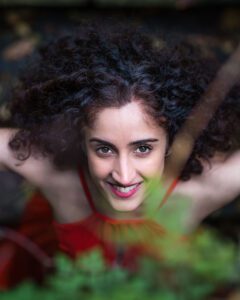
Nandita Shankardass
Nandita is a performing artist, choreographer, interdisciplinary facilitator and speaker.
She is the founder of Welcome Movement® created to generate wellbeing, stimulate creativity and empower freedom of expression through movement and dance. She nurtures her creative practice with communities, professional artists and young people, in a range of settings and in public spaces from museums and galleries to the outdoors.
Nandita is curious about human connection and ecology and she is inspired by the act of exchange and co-creation, where we share our stories and harness the power of our lived experience in accessible, engaging and transformative ways.
Image credits:
Headshot: © Rodwey Photography
Top banner image and images 5, 6, and 7 © Pranita Choudhury
Image 8: Norfolk & Norwich Festival © Alex Ward at Pine
Image 9: Stockton Riverside International Festival © Evie MacDonald
Image 10 & 11: An Indian Summer Festival, Inspirate © Tom Morley
Image 12: Brighton Festival © John Evans
Image 13: Stockton Riverside International Festival © Francis Fitzgerald
Image 14: Greenwich & Docklands Festival © John Evans
Image 15: Ensemble Festival © Sarah Hickson
Image 16: Greenwich & Docklands Festival © Sami Taylor
Bottom banner image: Ensemble Festival © Sarah Hickson

